Personalized prevention
Longitudinal and cross-sector analyses of clinical, microbiological, and epidemiological data support the identification of individual risk profiles and the development of targeted prevention strategies based on a One Health approach.
Within the central theme "Personalized prevention," the development of individualized treatment strategies instead of broad antibiotic use is a central focus. Novel diagnostic approaches are intended to enable the early identification of the most appropriate prevention and treatment strategies for individual patients.
To achieve this, we develop and apply data- and AI-driven methods as well as prediction models for the early detection of individual infection risks. App-based technologies and innovative data collection approaches are designed to support long-term outpatient care and continuous monitoring of study participants.
Based on existing cohorts (TIARA, BLOOMY, and AEGON) as well as surveillance data from R-Net, we develop personalized prognostic models for the following:
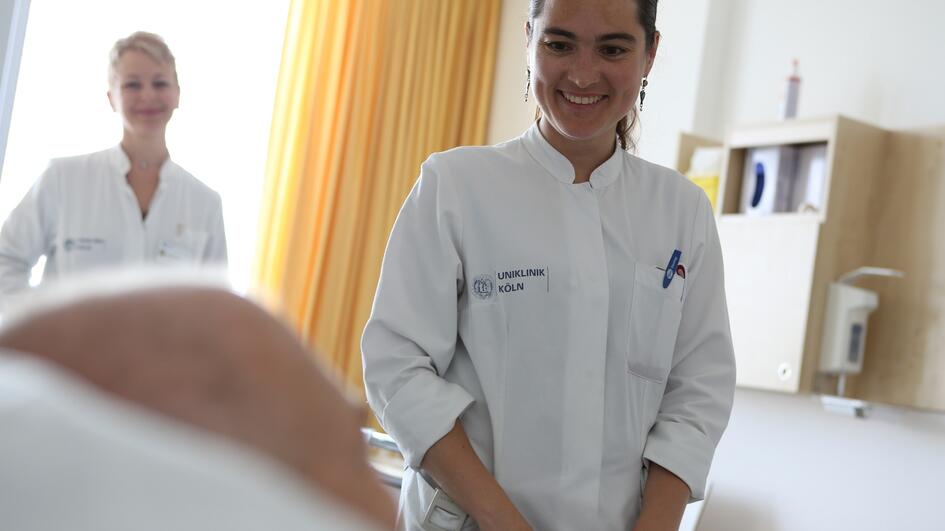
Responsible use of antibiotics is also on the agenda at the University Hospital of Cologne. In the picture: DZIF scientist Maria Vehreschild.


